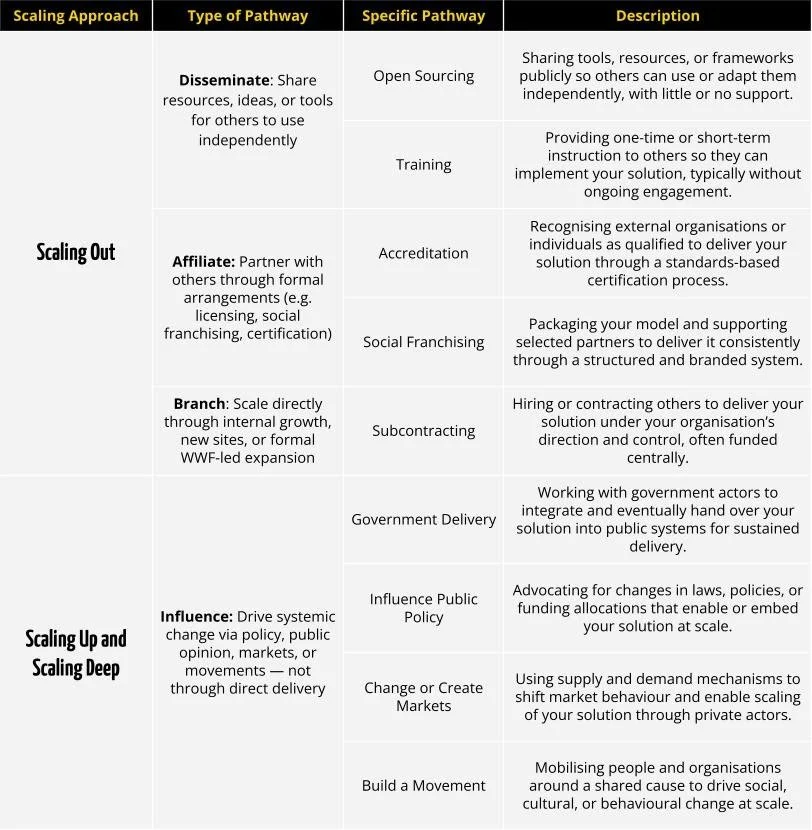
Pathways to Scale
There are many different ways to talk about pathways to scale. None are direct blueprints you can follow. Sometimes multiple pathways are combined into one—sometimes they are concurrent, sometimes sequential. Sometimes you just need one. Different types of organisational structures (e.g. INGOs vs. social enterprises), different types of projects, and different types of impact goals will all suit different pathways.
We’ve drawn on our favourite three sources to give you an overview of the different ways you can explore impact at scale.
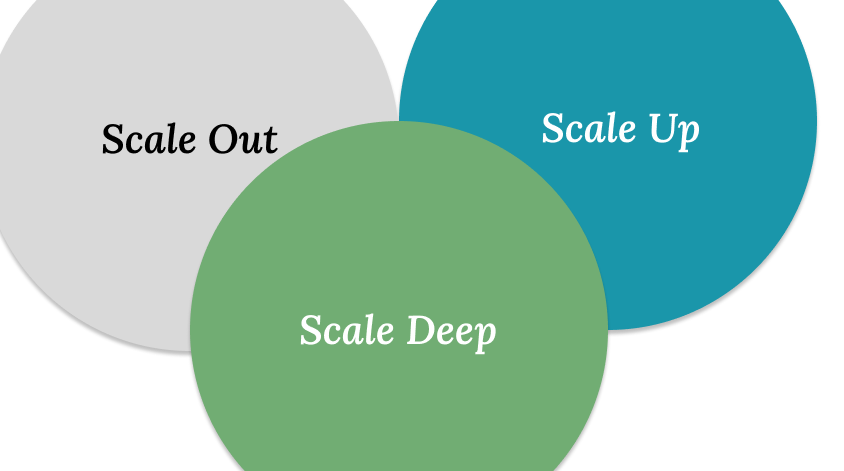
Scaling Up, Out and Deep
Scaling Out is about replication. It focuses on taking successful projects or models and replicating them in new locations or contexts. Example from WWF: SMART
Scaling Up is about policy and systems change. This approach focuses on influencing the structures and rules that govern how things work, creating an enabling environment for large-scale impact. Example from WWF: EU Nature Restoration Law
Scaling Deep is about impacting cultural norms and facilitating behaviour change as a means of tackling a problem. It focuses on influencing the way people think, feel, and act to embed impact at a deeper, more personal level. Example from WWF: Earth Hour
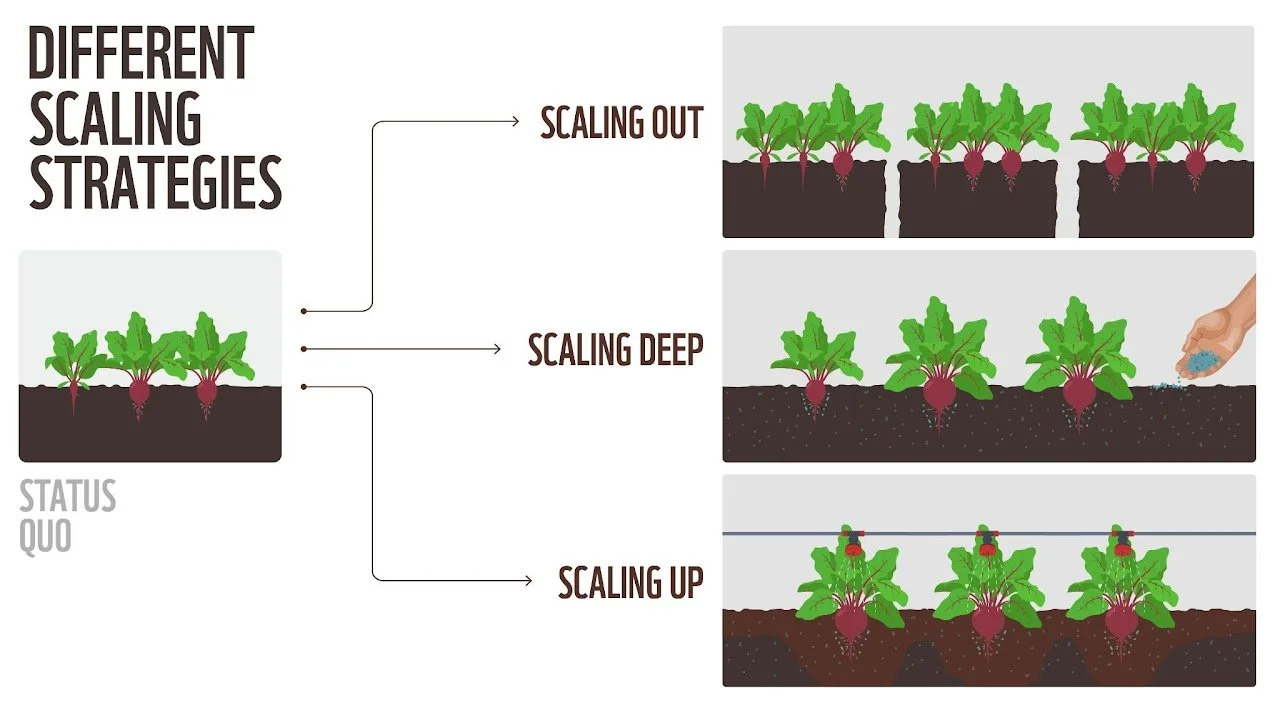
Adapted from Moore et al. (2015) paper: Scaling Out, Scaling Up, Scaling Deep.
Scaling Pathway Framework
This framework draws on insights from Spring Impact’s Scale Pathways Guide, and the Scaling Social Impact article by G. Dees, Beth Battle Anderson, and Jane Wei-Skillern.